Stung in the Heart
Newsletter No. 23 - July 15, 2026
Greetings on this new moon,
Last weekend, it was dark, and I found Harlow out in the garden. I leaned over to scoop him up — and in that instant, two sharp stings landed on my chest. A wasp, invisible in the dark, got me twice. Stung in the heart, quite literally.
It's been a painful few days. My left breast is swollen, itchy, hot. Irritating. And I am irritated. I’ve also been craving nettle mint tea, which of course, turns out to relieve my symptoms.
It's also gotten me thinking — because this is a perfect example of one of the principles I keep coming back to with clients: the relationship between interoception and exteroception.
Interoception is your awareness of what's happening inside your body — the itch, the burn, the crawl of skin, the flash of self-loathing that can ride along with physical discomfort.
Exteroception is the sense of stimuli coming from outside the body, such as sight, hearing, touch, taste, and smell. It refers to how the nervous system detects and responds to the external environment
What we perceive on the outside can be filtered through what's happening on the inside. This week, the sensations in my chest — itchy, burning, irritated — started coloring everything I looked at. The dogs became irritating. Ryan asking me a simple question became irritating.
When I stepped back, I could see clearly: nothing about their behavior had actually changed. I was the one who was different.

It’s hot in Italy right now so we took Uma on her first river outing. She absolutely loved it! She’s now about the size of Harlow and has captured our hearts!
Here’s a practice.
This sounds almost too simple, but it's a real practice in somatic embodiment.
Start by simply touching your body. Feel the boundary of your skin — the physical edge where you end and the world begins. Move your hands gently over your own contours, noticing what feels good and what doesn't.
Let this become a kind of body map, reawakening places you don't usually touch, bringing awareness and presence to parts of yourself that get forgotten.
Then stop. Notice how your body feels — likely a little different than before you started.
Now turn your attention outward. Slowly look in every direction, taking in the world around you as if for the first time, noticing it through this new, more present lens.
Then choose one thing that catches your interest — a tree, a shadow, an object on a shelf — and really see it. Let it land. Let it have an impact on you. What do you notice as you do this?
Then come back inside. Return to your body, to that felt sense of self.
From there, practice holding both at once — staying connected to the outside world while still anchored in your own skin. Orienting to your environment without losing yourself in it.
Orientation is, I think, the one of most important skills.
When you build a habit of orienting to your environment without losing your sense of self, you build greater discernment. And from that discernment, your choices and actions start coming from a place of deeper clarity.
Notice how your inner world shapes your outer one.
What lens are you looking through right now? And is it serving you — or limiting you?
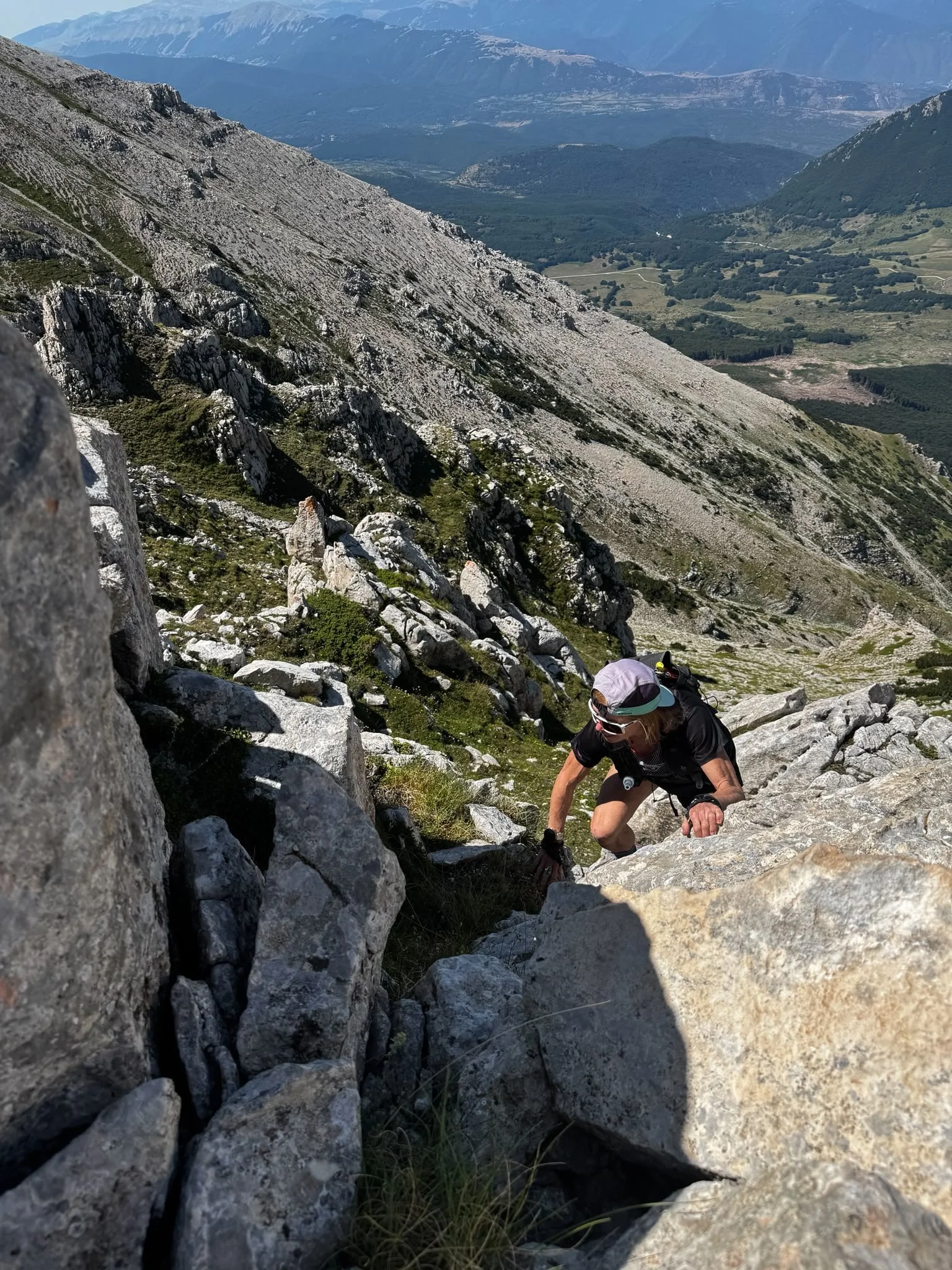
We've been scrambling and climbing more this summer. I love how it forces me to slow down — a real-time practice of my orientation skills, learning to notice when emotions and inner sensations start to override the experience.