
Rolfing® Structural Integration
Full bodied, graceful movement is the result of being at ease inside our own skin, and simultaneously in relationship to the world around us. By intentionally expanding what and how we perceive, we deepen our connection to and participation in life.
Carol Ann Agneessens, MS. RCST®
We all live in a physical body. It is through our bodies we experience the weight of pain and sorrow; as well as the exhilaration of joy and love. Bones break, muscles tighten, joints become compromised and over time, movement becomes limited. The intuitive coordination we once had as infants is influenced by repetitive motion, injury and compensation, emotions and attitudes.
The manner in which we exist and behave, in and through our physical selves, plays a remarkably large part in how we perceive, interact and experience the world around us.
Luckily, our bodies are changing all the time and when given the opportunity, can make functional changes resulting in greater ease and efficiency, regardless of age.
Rolfing Structural Integration® is a body based therapy that offers new possibilities and perspective for the client by releasing restrictions in the connective tissue and restoring healthy function. This is done mainly by aligning the body with respect to the field of gravity.
Through manually manipulating connective tissue, building awareness and educating through movement, the Rolfer™ helps the client discover a more efficient way of using and being in their body.
This system yields many positive results, including better posture, the resolution of various aches and pains, as well as providing a greater measure of general emotional or psychological well-being. It is not the techniques themselves that make Rolfing what it is, but instead the trained mind and approach of the practitioner; the way one sees the body and the strategy which is formed in progressive steps, that makes Rolfing unique.
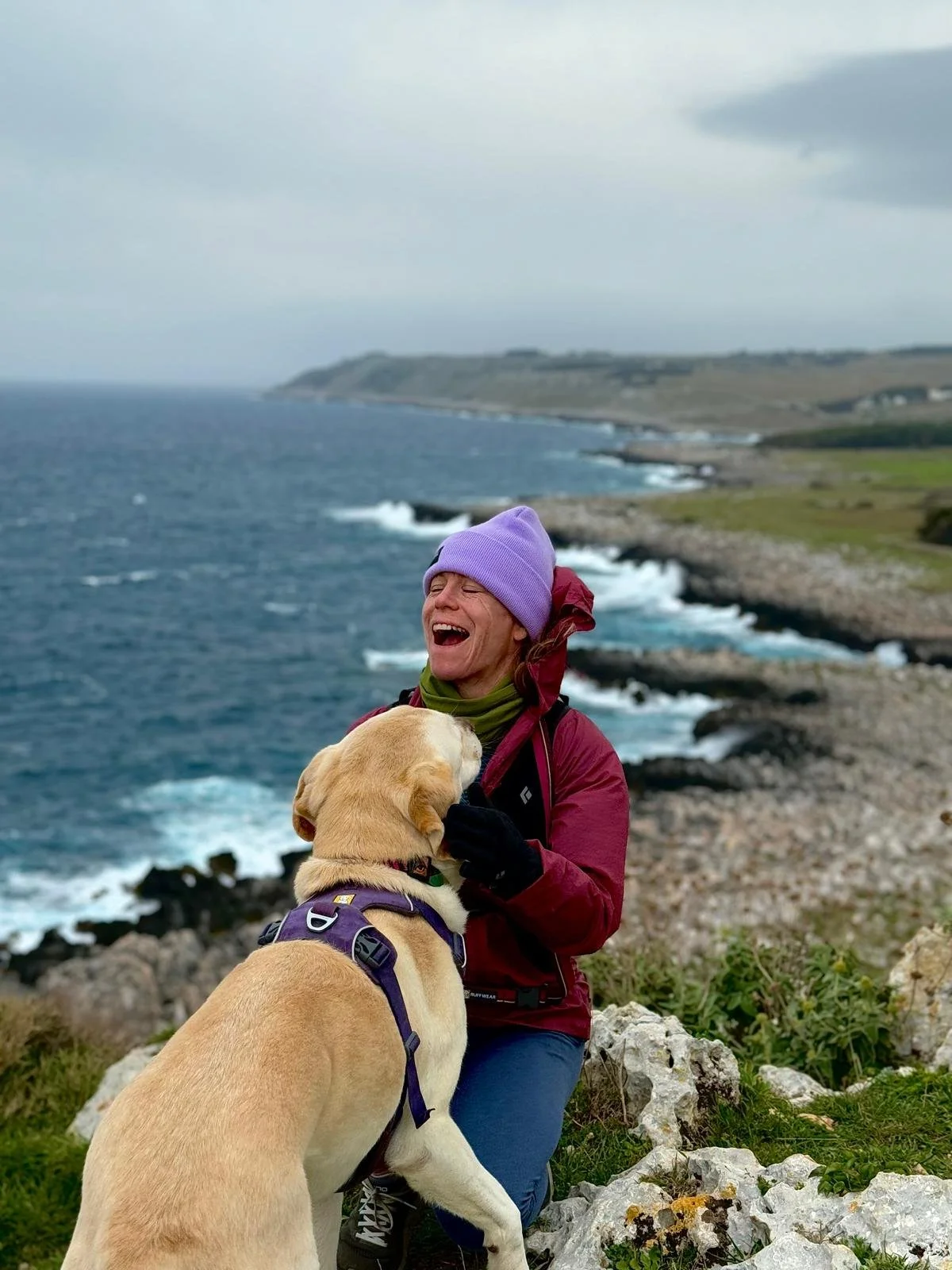
Working with Hanni
My Rolfing® sessions are not a passive experience; the client participates in the session. This has several benefits. Participation brings awareness to areas of the body where previously there lacked familiarity. Specific movement is often asked for as I work to free a particular area. This movement, coupled with the manipulation of connective tissue, greatly increases the degree of the release. Deliberate, attentive movement, guided by the Rolfer™ re-educates the muscles and neural system, creating a new, more efficient and graceful use of the limbs and body as a whole.
Since I became a certified bodyworker in 2002, I have been trained in multiple modalities and worked with many different individuals. I mingle my intuition with these experiences, use sound judgement and listen to the client in order to assess their emotional and physical condition. This helps determine how to proceed and with which method or approach. My clients often comment how one session is always different from the next. I find this to be the case because we are always changing and what we need is also changing.
This is what I find most exciting; the ability and willingness for the body to change when given the appropriate opportunity and space.
About Rolfing® Structural Integration
Fascia
Every muscle and organ in the body is enveloped in connective tissue called fascia. This interconnected system creates a vast three dimensional web, which provides critical support and protection for the whole body. Just as the fascial system can aid balanced posture and movement patterns, it can also support whatever patterns develop due to strain, injury and trauma. As we move through life and are forced to compensate, our soft tissue loses elasticity and what is at first a way to protect the body results in loss of fluidity throughout the entire body.
Gravity
Dr. Rolf recognized the fundamental influence of gravity on the body. When joints are properly balanced and integrated into the whole, the individual experiences an internal sense of equilibrium. If natural balance is disturbed, the body compensates in order to stay (somewhat) upright in gravity. The goal of Rolfing™ is to bring the body closer to its center line of gravity in order to decrease the energy used for basic movements such as sitting, standing and walking. By doing this, gravity becomes less of a force to struggle with and instead a factor with which one finds relationship.
Movement
The musculoskeletal system is the largest energy user in the body and when we misuse it and waste energy we are also loading a burden of strain onto areas (whether feet, knees, pelvic joints, spine or neck) that will ultimately demonstrate disapproval of being misused by becoming tired, painful, and dysfunctional. The geometry of tension in the joints must be perfectly balanced between compressive and tensile forces of the Fascial web, so that standing and walking require minimal energy expenditure. Body usage has a direct impact on how our inner world of communications (nervoussystem), circulation, digestion, and other functions work (or don’t work), and is also a representation of mood, feelings and personality.
Posture
Posture is a dynamic activity; it is not only how you hold your body when you are still, but how you carry it while you are moving. Posture emerges from our interactions with the world around us and how we perceive and orient ourselves in these events. Over time, our responses program the way we stand and move. Gravity is one of the earliest influences on our posture. In order to negotiate the pull of gravity, we all learned to stabilize ourselves in order to avoid falling down. And because our bodies are designed for mobility, they are inherently unstable. How we stabilize also determines our posture and the freedom and efficiency with which we move. The essence of posture is the unique way we negotiate between moving and stabilizing in relationship to gravity and other.
When the body gets working appropriately, the force of gravity can flow through. Then, spontaneously, the body heals itself. There is an ongoing psychological change as well toward balance, toward serenity, toward a more whole person. The whole person evinces a more apparent, more potent psychic development.
~ Ida P Rolf, Ph.D.
Ten Series
Sessions 1-3
Called the “sleeve” sessions, session 1-3 strive to loosen and balance surface layers of connective tissue.
Specifically, the first session is devoted to enhancing the quality of breath with work on the arms, ribcage and diaphragm. Opening is also started along the upper leg, hamstrings, neck and spine.
The second session helps give the body a stable foundation by balancing the foot and muscles of the lower leg.
The third session typically involves a “side view” for an understanding of how the head, shoulder girdle, and hips are positionally related to one another when standing under the influence of gravity. Then, the body is addressed within the context of this new vision.
Sessions 4-7
Sessions 4-7 are referred to as “core” sessions and examine terrain found between the bottom of the pelvis and top of the head. The idea of core also includes the deep tissue of the legs for its role in support.
Session four begins this journey, its territory extends from the inside arch of the foot and up the leg, to the bottom of the pelvis.
The fifth session is concerned with balancing surface and deep abdominal muscles to the curve of the back.
Session six seeks to enlist more support and movement from the legs, pelvis and lower back, while the seventh session turns its sole attention to the neck and head.
Session 8-10
“Integration” is emphasized throughout the remaining three sessions, as session 8-10 provide an opportunity for the practitioner to blend previously established advancements, and ones yet to be made, into the body in a way that encourages smooth movement and natural coordination.
During sessions eight and nine, the practitioner determines how best to achieve this integration, as the protocol is unique for each individual.
The tenth and final session is also one of integration, but more importantly, serves to inspire a sense of order and balance.
During a typical Rolfing® session, we start by evaluating a person’s structure. A Rolfer™ is trained to see bodies and how the dynamics of standing and movement occur and to determine how and where the body is restricted.
Rolfing accomplishes its results through a set of ten specific goals designed to open and balance the whole body. This is known as The Rolfing 10 Series. Through refined and intelligent pressure applied by a Certified Rolfer™, specific areas of the body are carefully manipulated to release areas where the body is restricted. The “Series” is administered progressively; each session builds upon the last until complete integration of the structure is achieved. The average spacing between sessions is one to two weeks.
“Tell me and I forget. Show me and I remember. Involve me and I understand.”
~ Chinese Proverb
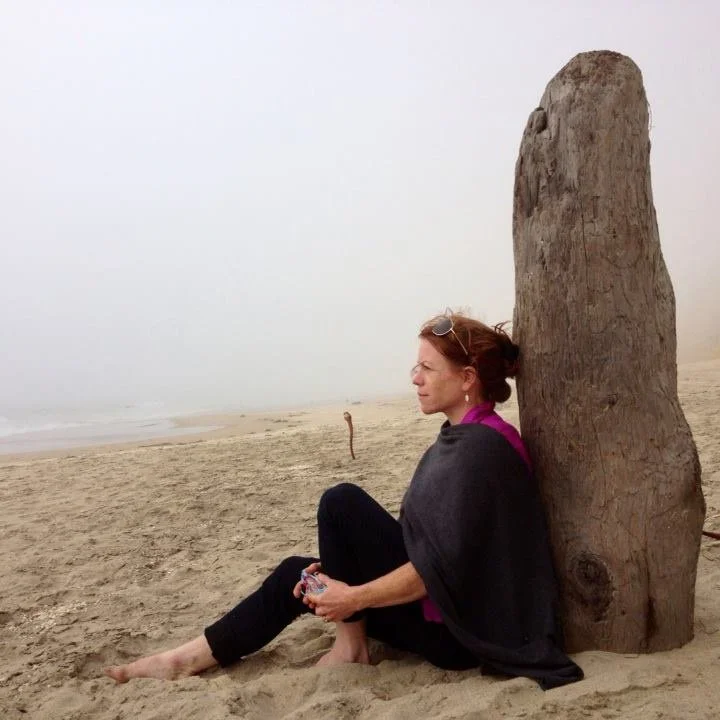
Hanni's career in bodywork was born from a personal quest to understand her own chronic health condition — one so rare that it left her healthcare providers without answers and her relying on medications that caused more harm than good. It wasn't until her senior year at Middlebury College that a new path revealed itself, when she was introduced to yoga, Reiki, and foot reflexology. The results were striking and nearly immediate. This experience gave Hanni a profound new perspective on health — one centered on listening to the body and finding healing from within.
Inspired by this discovery, she decided to pursue hands-on therapy and enrolled at the Utah College of Massage Therapy. There, she found deep fulfillment in working with others and witnessing their transformation.
After completing her training, Hanni returned to Vermont in 2002 and established her private practice, Green Mountain Bodywork. Shortly after, her path took an unexpected turn when a skiing accident left her with an open compound fracture of the right tibia and fibula. Three surgeries and a year on crutches followed — and it was during this difficult recovery that she turned to tai chi as a means of rehabilitation, seeking balance both in her body and in her life.
Through years of practice and work with clients, the concept of balance grew ever more central to her philosophy. In 2012, she seized the opportunity to study at the Rolf Institute of Structural Integration® — a perfect complement to her lifelong dedication to balance and graceful movement.
Since then, Hanni has continued to deepen and expand her expertise. She has pursued advanced Rolfing training and studied alongside osteopaths, broadening her understanding of the body's structural and functional relationships. Most recently, she has taken her journey abroad, training to become a Somatic Experiencing® practitioner in Rimini, Italy — a fitting next chapter for a practitioner whose entire career has been guided by curiosity, healing, and an unwavering commitment to understanding the body from the inside out.
Currently, she is seeing clients in her space in Decontra di Caramonico, Abruzzo, Italy and Middlebury, Vermont.
Education and Certifications
2025- present
Somatic Experiencing®
2018
Certified Advanced Rolfer™, The Rolf Institute of Structural Integration
2014
Certifed Rolfer™, The Rolf Institute of Structural Integration®
2011
Certified Advanced Myofascial Practitioner, Advanced Trainings with Til Luchau
2004
Orthopedic Massage, The Muscular Therapy Institute
2002-present
Tung Kai Ying Tai Chi Chuan and Falling Waters School of Tai Chi
2001
Nationally Certified Massage Therapist, Utah College of Massage Therapy
2000 B.A. English and Film/Video, Middlebury College
Additional Trainings
2013-present
Sourcepoint Therapy
2005
Cranial Sacral Therapy with Hugh Milne
2003
Reiki