
Newsletter No. 21- March 5, 2026
I've just returned from my second six-day Somatic Experiencing® training — a week of deep connection with colleagues and, perhaps more importantly, with my own nervous system.
I came away with greater clarity about my patterns and blind spots. I moved slowly into deeper territory, touching parts of my consciousness I had quietly tucked away. I also got to recognize my strengths — my capacity to support and hold space for others' nervous systems.
Now, back in daily life, I find myself wanting to carry all of this forward. There's a familiar fear that growth like this might fade. But that's not really how this work operates. It's slow, gentle, and designed for the long term. That's what makes it different.
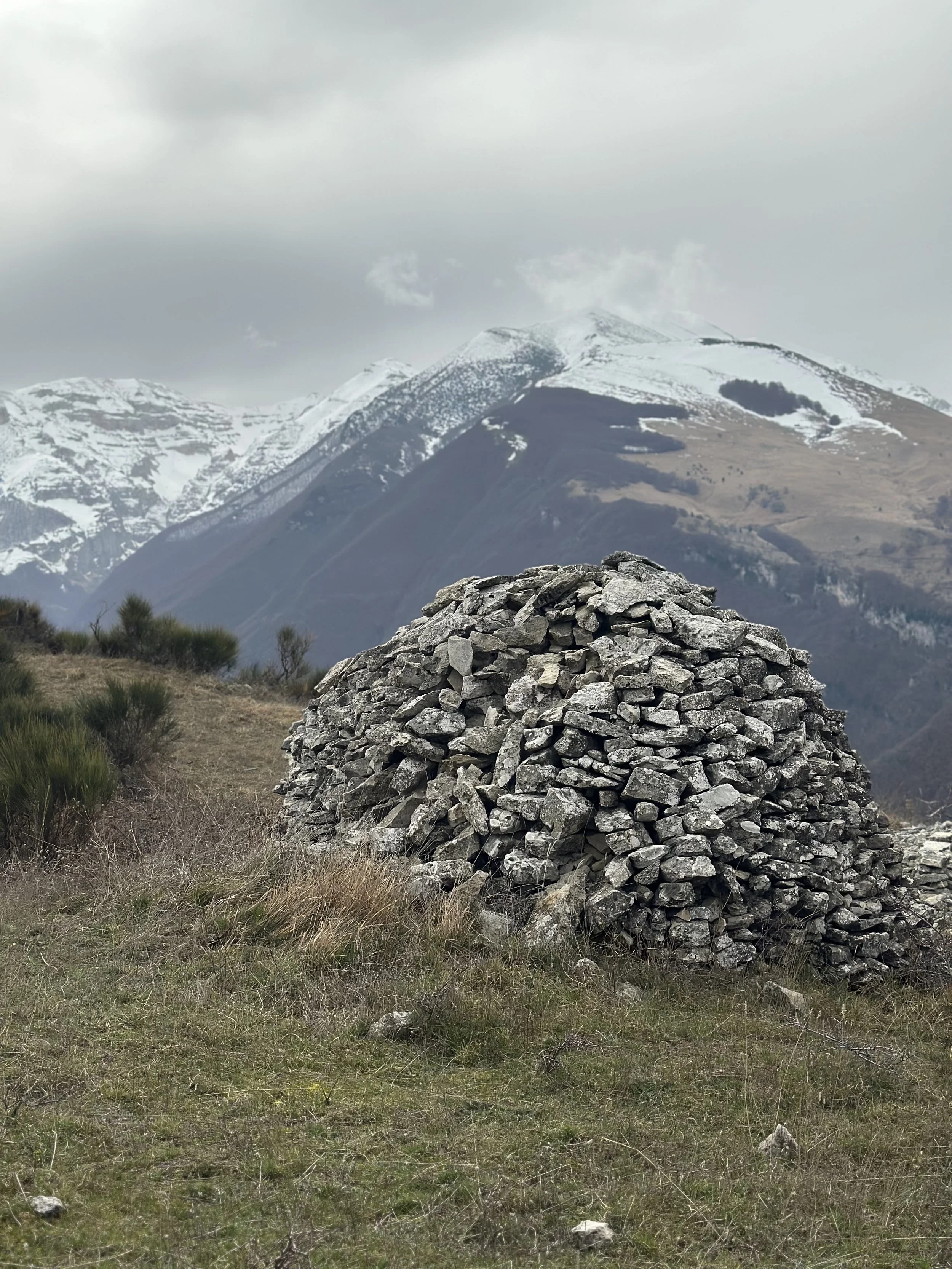
One of my greatest resources right now is right outside my door — this mountain, the birds singing, the land that holds me when I need it most. The trullo has become a symbol for me of what we all need: to feel contained, safe, and supported. Sometimes healing looks like this.
What is trauma, really?
Trauma isn't an event. It lives in your nervous system. Two people can go through the same experience — two different nervous systems — and one may end up traumatized while the other does not. It's not about strength or sensitivity. It's about the state of your nervous system in that moment.
When something happens that is too much, too fast — breaching our natural protective capacity — it can leave us feeling helpless. Instead of being able to defend ourselves and let that surge of energy move through, the body stores it. Over time, symptoms begin to emerge. Our sense of safety erodes. Our ability to communicate, take action, even play, becomes compromised.
Healing, then, has to happen at that same level — through the body. By recalibrating our sensory systems and restoring our ability to self-regulate, we create the conditions for something deeper and more lasting to shift.
So what does "somatic" healing actually mean?
When people ask me this, here's how I explain it:
The autonomic nervous system lives in what's often called the reptilian brain — our most ancient, sensory layer. The thinking mind doesn't speak directly to this part of us. Logic and insight, as valuable as they are, can't reach it alone.
So in somatic work, we learn the language of that sensory brain. We communicate through images, sensations, emotions, meanings, and movement. We bring presence — not to the story of what happened, but to how your nervous system is functioning right now.
That's where the magic lives. Healing doesn't happen in the past. It happens in the present moment, in the body, as it's actually being experienced.
Why this work matters now
The world right now asks a lot of our nervous systems. Constant input. Uncertainty. The feeling of forces larger than ourselves moving faster than we can process. Somatic work doesn't fix the world — but it gives you somewhere steady to stand inside it.
Finding a place to slow down — to be held, to gently release accumulated charge, to uncouple old beliefs and behaviors, to welcome back parts of yourself that never felt safe enough to show up — that's a profound gift.
If you're looking for that kind of support, a safe place to land, I'm here. I'd love to share this work with you. Click here to contact me and set up a free call to explore how we can work together!
With warmth,
Hanni
P.S.
One last thing — if you've been feeling the pull toward something deeper, I still have four spots open for Il Richiamo della Lupa (The Call of the Wolf). We gather October 12–17th. Don't let this one pass you by. Reach out with any questions.
P.P.S.
On a completely different note — Ryan and I are deep in the work of building US Skyrunning. At its heart, this project is about young athletes: giving them the chance to race on international stages, to discover what they're truly made of. To keep that possible and accessible, we've started a fundraising page. Check it out — Support US Skyrunning →
